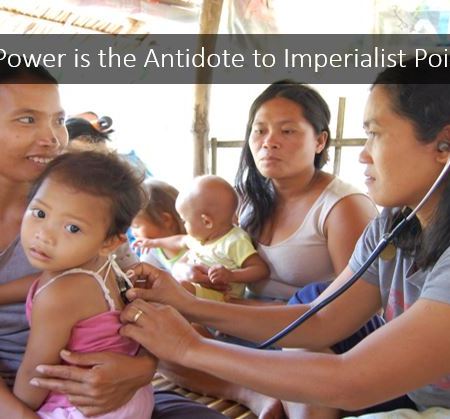
Powerpoint from Saturday Nov 26 Presentation

If you missed the presentation yesterday, or you’d like to look at the slides again:

Structural Roots of Ill Health and the Movement for Social Transformation in the Philippines

Negros Report

This slideshow requires JavaScript.

From June 4 to July 6 we were on Negros Island doing training and providing medical and documentary support to the Community Health Workers and the Community Based Health Programs in the peasant farmer and sugar worker communities.

Above you can view a slideshow of some of our work, and below you can view our…

Simple Negros Report Back Slideshow

Youth reenact the killing of Toto & affirm their committment to struggle!

People’s Health Radio Addresses the Structural Determinants of Health

A land occupation in norther Negros, Philippines, the flag of the National Federation of Sugar Workers (NFSW) is flying

Social and Structural Determinants of Health in the Philippines | rabble.ca.

Martha and Aiyanas, members of the Alliance for People’s Health and People’s Health Radio, recently spent 6 weeks in the Philippines working with grassroots people’s health organizations on the island of Negros.  In this episode, the first of two report backs, they reflect on the need to address structural issues (resources, land, power and control) in order to substantially improve people’s health.  On Negros, people’s organizations have begun to occupy land slated for the (inadequate, corrupt and stalled) comprehensive agrarian reform program (CARP) with dramatic results.

The show includes an interview with leading human rights advocate Toto from Escalante City in Northern Negros and movement music.  You can read more about the international work of the Alliance for People’s Health international work at aphvan.wordpress.com and more about Martha and Aiyanas’s trip at thistinyglobe.wordpress.com

Surface Iver Larit Now! Justice for Victims of Human Rights Violations

Organizing Centre for Social and Economic Justice
672 E Broadway
Vancouver, BC, Canada
V5T 1X6August 5, 2011

H.E. Benigno C. Aquino III
President of the Republic
Malacañang Palace,
JP Laurel St., San Miguel
Manila Philippines

President Aquino:

We, members of the Organizing Centre for Social and Economic Justice, strongly condemn the illegal arrest of Iver Bunda Larit and call for his immediate release. Mr. Iver Larit was illegally arrested on July 7, 2011 in Bacolod City by elements of the Philippine National Police and Armed Forces of the Philippines using a warrant for a “Ricky Larit”.

We are familiar with Mr. Iver Larit and his work with the United Negros Drivers and Operators Centre (UNDOC), a recognized, legal organization representing the interests of workers in the transportation sector. This targeting and illegal arrest are symptomatic of a continuing pattern of human rights abuses in which union organizers, social justice activists and human rights defenders are conflated with members of the armed revolutionary forces and labeled as ‘enemies of the state’.

The Philippine Government’s counterinsurgency plan, Operation Bayanihan, is just the latest attempt to use military means to resolve issues that are fundamentally about the conditions of social and economic injustice that continue to prevail in the Philippines. This plan, like its predecessors, victimizes innocent civilians and creates a climate of terror in targeted areas like Negros.

We are asking you to direct the PNP and the AFP to release Iver Bunda Larit immediately and to cease their harassment, intimidation and illegal arrests of union organizers, farmers, human rights defenders, community health workers and others working to improve the social and economic conditions of people in the Philippines. Additionally we call on you to scrap Operation Bayanihan and that the Philippine Government live up to its obligations as a signatory of the Universal Declaration of Human Rights.

There is growing concern here in Canada and among human rights watchers internationally that despite lip-service to the contrary the human rights situation in the Philippines has actually deteriorated under your Presidency. We will continue to raise these issues here in Canada and with relevant international bodies until these issues are addressed and the gross violation of human rights, illegal arrest and detention, trumped up charges, disappearances and extra judicial killings stop.

Sincerely,

Martha Roberts
Beth Grayer
Jen Efting
Aiyanas Ormond
Dave Hendry
Yuly Chan
Rocio Vasquez
Azar Mehrabadi
Melanie Spence
Peter Driftmyer
Deanna Fasciani
Thanh Lam

Turning the Tide: Health Sector Struggle for Social Transformation

Presentation for the Health Concern at ILPS, Manila, July 9, 2011

Greetings comrades from the health sector! The Alliance for People’s Health is proud to struggle alongside such militant and powerful health workers!

In these times of economic and political crisis, we must reexamine our current situation and take note of important avenues of struggle, to advance our work in building a new future predicated upon social and economic justice.

While the World Health Organization estimates gains in global health status, publishing statistics which promote national and international success in the achievement of key millennium development goals, we as the progressive health sector must: question the appearance of progress in the midst of deepening disparities between the rich and the poor; look to the essence of the daily lives of those oppressed and exploited masses we aim to serve; and rededicate ourselves to organizing and mobilizing both the health sector and our base in our communities into a force to be reckoned with.

Illness and Disease Among the Oppressed and Exploited

In reality, despite programs targeted to improve the health of the poor, little has changed in the past several decades. Preventable and/or curable infectious diseases remain 3 of the top 5 causes of death in children ages 1 – 4: pneumonia, accidents, diarrheas & gastroenteritis, measles, and congenital anomalies. Overall morbidity rates reveal that infectious diseases continue to account for the primary causes of morbidity (pneumonia, diarrhea, bronchitis, influenza, respiratory TB, dengue fever, malaria, and chicken pox).

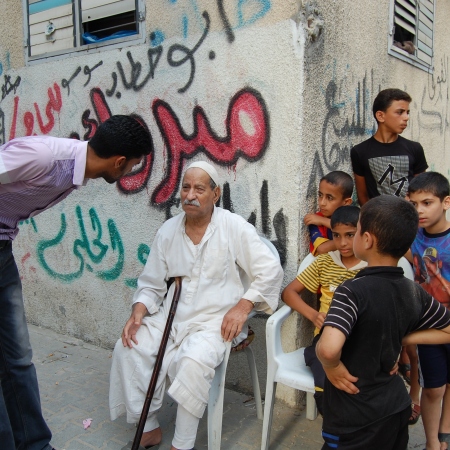
Old Man Malnourished and TB positive

Chronic diseases continue to rise, inextricably linked to morbidity and mortality from infectious causes in a dialectical pattern of disease; malnutrition, nutrient deficiencies, untreated oral disease, toxic and environmental exposures, long and arduous working hours, stress, and low resistance which exacerbate hypertension, diabetes, and heart disease, and are often compounded by co-morbidities of infectious origin such as skin or urinary tract infections, respiratory TB, pneumonia, and gastroenteritis and diarrhea. The perspective that development is reflected in a shift from infectious to chronic disease is not evidence-based. No one can deny that the exploited and oppressed workers and peasants continue to bear a disproportionate burden of the world’s suffering from disease.

The WHO publishes with pride advances in attaining the MDGs. Let us examine two MDGs: 1. poverty and hunger and, 4. child mortality.

MDG 1: eradicate extreme poverty and hunger; Target 1C. Halve the proportion of people who suffer from hunger.

The WHO reports that “[t]he percentage of underweight children is estimated to have declined from 25% in 1990 to 16% in 2010. Stunting in children under five years of age has decreased globally from 40% to 27% over the same period. In Asia, the number of stunted children is estimated to have halved between 1990 (190 million) and 2010 (100 million).”

Our experience does not jive with the rosy picture painted by the WHO. During our recent exposure in the Visayas we saw that among the fisher-folk and the sugar workers upwards of 70% of the children suffer from malnutrition and food insecurity using the WHO’s own criteria. The vast majority of families eat less than 3 times per day, and the vast majority of children are not having their basic nutritional needs met.

Further, the focus on micro-nutrient deficiencies and vitamin and mineral supplementation has diverted public funding, professional attention, and precious income of the poor towards profits for the pharmaceutical industry when what children really need is food!

In Canada, hunger is increasingly a serious issue among the exploited, oppressed and marginalized. Migrant workers generally and migrant farm workers in particular are experiencing daily hunger. According to government statistics 1/3 of Aboriginal households are food insecure, a symptom of the continuing colonial and genocidal war against indigenous people in Canada. In East Vancouver, where our organization is based, food bank line-ups have quadrupled in length and are full of working families and single parents, struggling to meet their basic nutritional needs.

MDG 4: reduce child mortality; Target 4.A: Reduce by two-thirds, between 1990 and 2015, the under-five mortality rate.

The WHO cites that “90% of all child deaths are attributable to just six conditions: neonatal causes, pneumonia, diarrhoea, malaria, measles, and HIV/AIDS”… and promotes the four strategies of child survival:

  • appropriate home care and timely treatment of complications for newborns;
  • integrated management of childhood illness (IMCI) for all children under five years old;
  • expanded programme on immunization;
  • infant and young child feeding.

Preemie babe whose mom was hypertensive

But how is the WHO rolling out this strategy? The abject lack of primary health care services for mothers, infants, and young children in rural and urban poor communities, alongside shocking conditions of under-development, are exacerbating a health crisis of heartbreaking magnitude.

The reality on the ground on Negros is that no infants of the poor and the oppressed are receiving home care from a trained professional, IMCI is only available to those who can afford to pay for transportation and hospital costs, and infant and young child feeding is only provided 3 times per year by the LGU, if that. As a midwife, it is very difficult to bear providing primary care services to mother’s who report that 4 of their 6 children died from easily preventable and/or curable causes.

In the interest of time, I will not go into MDG 5: maternal health, but after spending a total of 5 months in the country-side of Negros providing intrapartum and postpartum care to mothers and newborns, I speak from direct experience that there is no movement to reduce the maternal mortality rate of 1/120, and women continue to lack access to emergent care for ecclamptic seizures or postpartum hemorrhage.1

Community and National Health

The situation in exploited communities, both within the imperialist and in the Third World, is worsened by government priorities which serve the need of the world’s ruling elites and their lieutenants.

Aggregate health indicators aside, the real-life situation for the vast majority of Filipinos, the 70% of the population that survives on Php 86/day (about $2 Cdn), continues to worsen under economic crisis.

I quote from IBON here: “slowing improvement – and in some cases reversals [of health status indicators] – is very much a direct consequence of the barrier to further improvement that rising poverty and inequality creates and of the worsening government neglect of health.”2

The gross lack of health care is a clear demonstration of government priorities, and in particular health services to pregnant women and children are the clearest indication of the government response to health needs at the community level. Capitalist health care services mimics the ideology and structures of imperialism, siphoning public dollars towards corporate profits.

The world over health dollars are allocated towards high-priced care to serve the needs of the wealthy. Priorities include: a) tertiary care catering to the economic elites in the urban centres, b) specialist care involving highly trained and highly paid medical professionals, c) high-tech care involving advanced and ultra-expensive medical technology produced by major corporations, and d) expansion of the tight grip of big pharma and Western medicines to alleviate the suffering of the ill.

International Health Situation

The progressive health sector must question the advances towards the achievement of the MDGs and the apparent successes in public health over the last three decades. These advances are based on programs, such as the micro-nutrient supplementation campaigns, feeding programs, and narrow development projects which fail to address the underlying political and economic structural inequalities enforced by imperialism which continue to wreak havoc on the health and well-being of the poor and exploited sectors of society under capitalism.

We must take up the challenge that the WHO is ideologically bankrupt, has co-opted the once-progressive discourse on the social determinants of health, truncated primary health care services, and diverted public attention from the structural roots of health inequalities.

The statistics used in the rosy WHO outlook abstract diseases from the lived experiences of whole human beings and communities and fail to reflect our experiences of a constellations of illnesses and ill health associated with poverty, discrimination, social marginalization, and oppression. The statistics generated by WHO do not adequately address the class differentiation within nations, and the types of ‘targeted’ programs currently advocated by the WHO cannot improve the health of the mass of oppressed and exploited people because our ill health is rooted in the structural inequalities created by imperialism.

The progressive health movement knows well that war and economic exploitation are the root causes of the health crisis; yet the bourgeois health sector continues to ignore and intentionally overlook these overarching structural issues while focusing primarily on the behavioural, biological, and income-related etiologies of disease.

War and Occupation

Internationally, governments continue to support war and occupation at the expense of public health and primary health care. Canadian military spending continues to rise, as health and social programs are slashed. The Canadian government has been estimated to have spent approximately CAD$ 22B in military and combat operations in Afghanistan between 2001 and 20113, and while Prime Minister Harper has promised the withdrawal of the majority of the 2830 troops stationed in Afghanistan, 950 will be transferred to the NATO Training Mission-Afghanistan to provide training to the Afghan National Army and Afghan National Police. Further Canada, led by Conservative Prime Minister Stephen Harper, was amongst the first to lead the charge in the bombing of Libya, deploying CF-18 fighter jets carrying 226 kilogram bombs, as well as naval frigates to the coast to enforce an economic trade embargo, to the tune of millions of tax-payer dollars.

In the Philippines, the defence budget for 2011 has been allocated at PhP77.5B, the health budget at PhP38.6B, while the total estimated for debt servicing PhP823.3B.4 The 2011 Aquino budget has been described as an ‘austerity’ budget to focus on repayment of international debts, yet agrarian reform programs, minimum wage increases, and the other demands of the progressive sectors remain unmet. Water resource development is another development program to take a major hit, undermining the health and development across the Philippines, and setting the stage for potential role-backs in terms of advances in the control of infectious disease. Indeed, in many areas water-borne diseases continue to afflict those without access to deep wells or water purification facilities.

CHWs Ameila and Marykris in prison on trumped up charges 2008 - 2010

The Aquino government has rolled out it’s new counter-insurgency program, Oplan Bayanihan. “Armed Forces of the Philippines (AFP) spokesman Brig. Gen. Jose Mabanta Jr. said Oplan Bayanihan …shift[s] to the “whole of nation approach,” which means that “even ordinary people should be involved.”5

The experience on the ground in the militarized communities is that of total military occupation. Having ‘ordinary people’ involved in the counter-insurgency means that ordinary farmers are accused of being NPA combatants, are afraid to leave their houses, to till their farms; as such their land stands idle and is re-claimed by landlords who then plant cash crops for profit while peasant farmers and their children go hungry. Another focus of the AFP is ‘investment defence’ as communities are subdued into silence as mining operations destroy the arable land and drive peasants into the urban poor ghettos.

The Community Health Workers in organized communities are targeted for military harassment and intimidation, are threatened, and jailed on trumped up charges.

What is our response as the Health Sector?

Given this analysis of the current situation how does the health sector struggle for health for all as a vital part of our joint struggle for total social transformation?

We know what will improve people’s health! Increase economic and political power! The lesson we drew from our recent experience on Negros Island is that land is good for health! That People Power, institutions controlled by peasants and workers, and economic justice create the conditions that support health in our communities.

Our work in the health sector must build opposition and alternatives to the current political and economic agenda of imperialism.

Our collective and concerted efforts must:

  • Challenge the ideological hegemony of imperialist health institutions and think-tanks both through the use of accessible popular education in exploited communities, and political campaigns targeted at health workers and professionals;
  • Advance mass organization both at the community level and amongst health care workers;
  • Build health programs rooted in and controlled by democratic mass organizations in exploited communities, and which prioritize the immediate health needs of the community – in particular of children and mothers;
  • Thus build community capacity for self-governance;
  • And increase community control over the economic functioning of the community6

Increase Economic Power in Exploited Communities

The political campaigns of the health sector should fit strategically with the broader movement of our class; while we support cross-class alliances, we must raise demands that mobilize our communities around the immediate needs of workers and peasants, and challenge the structural roots of our ill health. For land to till for the landless; for wage increases, job security, and social benefits for the working class; for peace coupled with justice for the exploited and oppressed of the world!

In our context in Canada one of the things we have identified is that we need to demand public services, but public services controlled by the people, so that these are not just a means of social control or of placating the working class, but become instruments of working class power. And we must stand in firm international solidarity in all that we do, to ensure that the gains made in the imperialist centres are not born on the backs of our comrades struggling to the South.

Increase Democratic Organization

The political campaigns of the health sector, in particular through their application in CHBPs, have the potential to train working class leadership for the longer-term struggle for social transformation. We saw this in the country-side, as the growing democratic formations of CHWs has the potential to form a strong and militant mass organization.

Coupling our practical health work with families and communities with the struggle for longer-term gains through mass organizations is a powerful combination that should make the ruling elites tremble! Community Health Workers are powerful organizers, as the win the hearts and minds of the people through their brave service.

Increase Political Power for Workers and Peasants

Finally, we must forge ahead and push the health sector to fully integrate into movements for economic and social transformation. It is imperative that as health workers we no longer remain neutral about war and occupation! We must challenge our colleagues to speak out against war, and actively promote campaigns to end imperialist war and occupation!

In the best of militant traditions, we face hardships and overcome challenges with the love of the people in our hearts. We will struggle, and we will win!

Youth reenact the killing of Toto & affirm their committment to struggle!

2 Chronically Ill: An Overview of the Philippine Health Sector, p. 21.

3The Secret Cost of the War by Blair Redlin www.rabble.ca

4IBON National Budget 2011: Neglecting Government Responsibilities.

5Philippines to adopt US strategy in counter-insurgency starting January 1, from Asian Defence News, cited from: https://revolutionaryfrontlines.wordpress.com/tag/oplan-bayanihan/

6What we at the APH call pre-socialist practices in reference to an article by Vicente Navarro

Health in the Countryside and the People’s Response

An interview from People’s Health Radio on rural health issues in the Philippines, government neglect of health services, militarization, and the people’s response through community organization and community based health programs.

Philippines Health Struggle

Listen to the entire program here

Is Capitalism a Disease?

Listen here to find out!


Health and Human Rights in the Philippines

What’s the state of health and human rights in the Philippines today?

LISTEN TO THE PEOPLE’S HEALTH RADIO SHOW HERE

People’s Health Radio host Jen Efting revisits the story of the Morong 43, a group of 43 community health workers detained by the Philippine Government from February to December of 2010.  What have been the impacts of the detainment and ongoing military harassment on the health workers, their families and communities?

Includes:

Interview with Aiyanas Ormond – People’s Health Radio co-host and local organizer who is currently in the Philippines with his partner and children on a solidarity mission.  More information about their trip can be found at thistinyglobe.wordpress.com

Interview with Merry Mia-Clamor, one of the 43 health workers detained by the Philppine government.

Audio from a talk in Vancouver by Dr. Julie Caguiat, spokesperson of the Free the 43 Health Workers! Alliance.

Music by Victor Noriega, Aki Merced/Renato Reyes/Karl Ramirez, Amadou, James Caraang (Feat. Margie Banda and Sol Diana), Black Uhuru

Malnutrition and the Three ‘Isms’ in the Philippines

In our stays in the mountains of Guihulngan, Negros Oriental, as well as here in the fisher-folk community of Mocabog, Escalante City, Negros Occidental, we have seen a situation where malnutrition is the rule, rather than exception among children. We observed in our last stay in Guihulngan in 2008 that a low-grade malnutrition was so prevalent among the children at the Kalabaklabakan school that it became invisible (normalized) very quickly, even to us.

Measuring Arm Circumference

On this trip Martha has been keeping a record of every child she does a check up with and we have also been consciously looking for the visible symptoms of malnutrition among children in the communities we stay in. It’s shocking – and while I don’t think anyone is willing to make the rational argument that widespread malnutrition among children is an acceptable state of affairs, malnutrition is the predictable outcome of the social systems shaping Philippine society: imperialism, capitalism and feudalism.


Imperialism

The political economy of the Philippines is shaped by its history of Spanish colonization and U.S. imperialism. The consequences have been a stalled feudal mode of production in much of the country, hundreds of years of plunder of the country’s rich natural resources, and forced underdevelopment – meaning economic development geared to the needs of the colonial or imperial masters.

Sacada toils by hand in the heat of the cane

This process continues today under the aegis of the institutions of imperialist globalization: the IMF, the World Bank, the WTO, the G7, NATO and the imperialist states. In the realm of food this means that the Philippine state cannot use its budgetary or productive capacities to meet the basic nutritional needs of its citizens – such as moving towards self-sufficiency in rice production – without breaking with the institutions and structures of imperialism and facing the inevitable violent and punitive reaction.


Capitalism

The internal logic of capitalism, a capitalist food system, undermines the framework of nurturing, community, connection to the natural environment, expression of craft and love that should define the growing, preparation and eating of food and turns it into a purely commercial transaction. The commodification of food means that production is geared to profitability for capitalists and their corporations rather than to meet human needs. The capitalist imperative of profit drives the move to highly processed and sugar based ‘fast foods’ that result in malnutrition alongside overproduction and waste in the advanced capitalist countries.

The speculative chaos of the capitalist market has profound repercussions for the nutrition of the millions of Filipinos who survive on less than $2/ day. A spike in the international price of rice like we saw in 2008 means families go hungry, or start eating corn used for animal feed, which was common at that time. For children at the critical stage of development (up to 5 years when the brain is taking shape) going hungry during a period of crisis can have repercussions for their whole lives.

And rice isn’t the only commodity price that can have a major impact. Here on Negros sugar is king. When the international price is low and fields aren’t cultivated, there is no work and families go hungry. On the flip side when the price is good there is little trickle down to the workers, but the land-grabbing of the landlords increases. Meanwhile Coca Cola Corporation, who market their sugary drinks throughout the Philippines, does not buy sugar from local producers, but instead imports sugar.

Nestle for sale at every Sari Sari store

Another expression of the moral bankruptcy of the capitalist food system is the marketing of junk food in areas where there is widespread malnutrition. In Barangay Trinidad in Guihulngan we went to try to buy groceries in the sitio of Kasingan, the nearest ‘town’. The small sari-sari stores all sell the same products, tiny plastic packages of Nestle coffee and powdered milk; chips and other junk food; liquor and cigarettes. Meanwhile there is a desperate need in the community for iodized salt (goiter in pregnant women is prevalent), high quality sources of protein, and vegetables. Lack of transportation and refrigeration are also major problems in the area, but the typical capitalist answer is to aggressively market products the community does not need, rather than to collectivize resources to meet the urgent needs of the people.

Feudalism

3 years old, severely malnourished...

Malnutrition specifically and food security in general are, in the Philippines and in Canada, fundamentally problems of income and of the distribution of wealth. For the majority of Filipinos who are peasant farmers, the issue is land. In areas that we visited, tenant farmers who’s children experience daily hunger have to turn over 1/3 of every harvest to their landlord who has done no work to grow the food, and in many cases has never set foot on the land. This legalized form of theft, and the landlords who benefit from it, is the root cause of malnutrition in many communities.

Today we visited the camp out at Jonob-Jonob, where the farmers organization affiliated to the National Federation of Sugar Workers and the Kilusang Magbubukid ng Pilipina (KMP) have occupied 42 hectares of farm land where they were formerly sacadas, or day labourers. The people we met there were visibly more healthy, well fed, and happier than any other community we have visited in our time in the Philippines; there was a light in their eyes, their skin of the children was clear of infections, the small children were almost all of normal weight, and the youth appeared cheerful.

The lesson I draw from this is that having land is good for your health and land redistribution (or genuine land reform as they call it here) is the best way to really tackle the problem of malnutrition as well as a host of other health problems in the Philippines.

Rice not arms! Sign in land occupation

Social and Structural Determinants of Health in the Philippines

Disease is a social and political category imposed on people within an enormously repressive social and economic capitalist system, one that forces disease and death on the world’s people” Vicente Navarro

At the Alliance for People’s Health (APH) the Community Health Worker (CHW) Team and the ‘Smile with Dignity’ Dental Campaign Committee have been discussing and debating the social and structural determinants of health. The social determinants approach defined by the belief that our behaviour and our access to social and economic resources being the foundation of health; the structural determinants approach defined by the viewpoint that it isn’t simply access to resources that determines our health, but goes further to argue that control and ownership over those resources is the ultimate factor in determining individual health and the health of our communities. Perhaps this seems, in appearance, to be a question of semantics, but in essence, it is a significant leap in the strategic approach to projects which purport to be supporting health.

Why have APH members and organizers been so deeply exploring this topic? Because in our experience as a grassroots organization of health workers and health organizers from working class and marginalized communities, it isn’t enough to say that our communities are experiencing higher rates of disease and illness, that we’re more likely to be sick, because we’re poor. It isn’t enough to say that our behaviour is riskier due to ignorance of better choices, or our risk of illness is higher because of the income level of our community. Where does that leave us? This type of social determinants analysis fuels the fad in public health promotion: the social marketing of behaviour-change messages (as if ‘choice’ is a matter of choosing from among equal options), charitable programs and under-funded social programs often end up functioning as another form of social control in poor communities through hoop-jumping and time-consuming rules for participation, or the fad in Vancouver of building supposedly ‘mixed-income’ communities (as if the decades-old trend of ‘mortgage helpers’ has improved the health of the poor families that pay absorbent rents for the privilege of crowding into the basements of the affluent).

Our analysis has to go deeper; we require a radical analysis to root out the problems at the structural level and to direct us toward changes which strike at the heart of health inequalities. The brunt of the matter is that the few have control over the direction of their lives through political, economic and social power, and the many do not.

Pondering the Usefulness of a Social Determinants of Health Approach

The hard facts are that poor communities experience higher rates of illness and injuries, the question that plagues health academics, researchers, and activists is – why? And the answer to the ‘why‘ is the key to ‘what is to be done‘. After much study and discussion, in fact, 14 years of study and discussion, I firmly believe that in isolation of a deeper analysis, the social determinants of health perspective is stunted and leads the health sector down a path of misguided action.

The premise of the social determinants of health is that health is a result of our socio-economic environment, and as such, poor health outcomes are not equally distributed in our fundamentally unequal society. This sounds great initially, but what are the proponents of the social determinants approach really saying? That health status is a reflection of health-supporting (or harming) behaviours, which in turn are determined by our access to the economic and social resources that support us to make better choices.

Following along this path of analysis, if health is determined by our access to resources, than the answer is to increase the access of the poor to things like education, housing, and childcare. The logical response to this viscous cycle of poverty-illness-poverty is to create targeted social programs in poor communities.

Unequal Distribution of Ill Health in the Philippines: A Basic Analysis

Consider some facts about health and disease in the Philippines. The WHO reports some improvement in maternal and infant mortality rates, an important reflection of the overall health of a society. However, as IBON points out, these statistics are aggregate for the entire population, and don’t reflect the realities in inequalities between the ruling elite and the peasant farmers, agricultural workers such as the Sacadas, or sugar workers, and workers in the informal economic sectors (vendors, street sweepers, street children, garbage dump scavengers, etc.).

Aggregate health indicators aside, the real-life situation for the vast majority of Filipinos, the 70% of the population that survives on Php 86/day (about $2 Cdn), continues to worsen under economic crisis.

I quote from IBON here: “slowing improvement – and in some cases reversals [of health status indicators] – is very much a direct consequence of the barrier to further improvement that rising poverty and inequality creates and of the worsening government neglect of health” (Chronically Ill: An Overview of the Philippine Health Sector, p. 21).

In reality, despite programs targeted to improve the health of the poor, little has changed in the past several decades:

  • Preventable and/or curable infectious diseases remain 3 of the top 5 causes of death in children ages 1 – 4: pneumonia, accidents, diarrheas & gastroenteritis, measles, and congenital anomalies. Overall morbidity rates reveal that infectious diseases continue to account for the primary causes of morbidity (pneumonia, diarrhea, bronchitis, influenza, respiratory TB, dengue fever, malaria, and chicken pox).
  • Chronic diseases continue to rise, inextricably linked to morbidity and mortality from infectious causes in a dialectical pattern of disease; malnutrition, nutrient deficiencies, untreated oral disease, toxic and environmental exposures, long and arduous working hours, stress, and low resistance exacerbate hypertension, diabetes, and heart disease, and are often compounded by co-morbidities of infectious origin such as skin or urinary tract infections, respiratory TB, pneumonia, and gastroenteritis and diarrhea. The perspective that development is reflected in a shift from infectious to chronic disease is not evidence-based.
  • 57% of households have inadequate nutritional intake, the equivalent of 10 million households. This means that the majority of children are susceptible to malnutrition, and subsequently have lowered resistance to morbidity and mortality from infection. In Western Visayas (Negros Occidental) 30-40% of children are underweight or under-height. Iodine deficiencies, Vitamin A deficiencies, and iron deficient anemia persist at high levels despite government programs to provide micro-nutrient supplementation in rural areas. Pregnant women continue to have high rates of iodine deficiencies and anemia despite the social marketting of behaviour-change messages.

WHO statistics estimate that 6.6 percent of children in the lowest income bracket in Western Visayas dies before reaching their fifth birthday. Now let’s ask, why?

Diarrhea as a Case Study in Lack of Economic and Political Control

Given the state of medical science and the human capacity for development, if a child dies from diarrhea, let’s ask, “Why did this happen?”

The bio-medical model of disease points to pathogens contracted by the child that creates infection in the gastrointestinal tract that lead to dehydration and eventually, if not treated with a medical intervention, to death.

A behavioural approach points to the behaviour of the child and thus ultimately of the parents in the cause of a child’s death. Behaviours such as not washing hands after defecating and not bathing regularly, and not keeping a clean household contribute to diarrheal diseases. It is likely that lack of personal and household hygiene contributed to the contamination with pathogen that was the source of a child’s illness.

A social determinants approach would look deeper than the pathogenic and behavioural factors; true enough that contracting a gastroenteritis does not lead to death without multiple contributing factors. Perhaps once the child was ill the parents were uncertain about how to take care of the child, and did not use oral re-hydration, offer clean water to drink, or offer the child enough to eat. 30% of under-five deaths are ultimately attributable to malnutrition irregardless of the pathogen that was the cause of death; malnourishment is all-too-frequent and compounds diarrheal and other diseases.

A structural approach to the determinants of health argues that, ultimately, the inability of the parents of this child to have economic and political control over their circumstances led to the child’s death. The parents did not have the ability to determine for themselves the conditions of their daily lives, the source of their livelihood, and sustenance upon which they were forced to survive. As one health worker explained to us, the children of the marginalized have no hope, they do not dare to dream to be doctors or teachers; when you ask the children of the rural and urban poor what they dream to be, they can give no answer, for from a very tender age they are acutely aware they have no control over their future.

There exists a complex of behavioural, social, and structural factors that determine health status. Yet, the structural factors are the base from which communities are able to change or influence the social and the behavioural factors. When communities have control over economic capital, ownership of financial assets, land, and production, and political control over decision-making structures and super-structural institutions, only then will the base conditions that determine health be addressed.

Behavioural and Social Responses to Deaths from Diarrhea

Let’s consider why didn’t this child wash his hands after defecating? Why wasn’t he able to bathe?

In the Philippines, the WHO estimates that approximately 80% of the population has access to a clean water source and between 60-80% live in a dwelling with access to improved sanitation. But even as I read these stats, I think to myself, what does “access to a clean water source” mean? When water must be purchased or boiled with precious fuel, how can we say that not using scarce clean water to wash hands or to frequently bathe a child who will just get grubby again a choice? What are the other choices that are presented to the parents of a child who live in poverty, as 70% of Filipino families do? Even if parents are ‘educated’ and know that feces on the hands transmit disease, or mucus and food scraps on the face attract insects that carry infection, knowledge does not provide clean water to bathe a child.

OK, so why wasn’t the floor of the household kept clean? If a baby crawls through feces, either human or animal, that was tracked into the house on dirty feet or shoes, and then puts her hands in her mouth, that is a source of diarrheal disease. Or a mother picks up her fussy baby, transferring feces from the floor onto her hands, and then prepares the family dinner, then diarrheal disease-causing pathogens are transmitted to the entire family.

How did the WHO gather their statistics on access to clean water and improved sanitation? In our experience, urban poor and rural peasant communities struggle to survive under very difficult circumstances with completely inadequate housing and almost no access to proper sanitation. Even the most diligent family would be hard pressed to prevent the spread of infection in an environment that overwhelmingly facilitates the spread of disease.

Examples of Solutions to the Behavioural-Social Determinants Complex

If our exploration of ‘whys‘ of a child’s death from diarrhea ends with behaviour and basic social factors, possible solutions could involve a) treating diarrhea before it becomes deadly, b) and building more housing and improving access to clean water sources to facilitate proper hygiene.

a) Selective Primary Health Care – Oral Rehydration Therapy

The World Health Organization (WHO) and UNICEF continue to promote ‘selective primary health care’ and the development of social marketing projects to teach communities how to prepare and administer oral re-hydration solutions (ORS) which come from WHO and UNICEF in the form of sealed packets of powdered mix to which clean water must be added. Rather than establish and fund the operation of essential primary care the the community level through Community Based Health Programs that empower the community to collectively tackle the fundamental problems of underdevelopment through participatory projects, WHO and UNICEF employ shallow campaigns. ORS is a great example of a ‘selective’ primary health care program; the development and distribution of ORS packets and social marketting campaigns to promote the use of ORS and zinc supplementation at the community level.

Who benefits from the implementation of selective primary health care at the national and international level? The companies contracted to produce the ORS packets, the companies contracted to develop the marketting campaigns, and so on. I feel sick to my stomach as I write this. After what we’re witnessed, and what we’ve heard from the peasant farmers and the CHWs on their assessments of the roots of the health problems in the country-side, I know from first hand experience that selective primary health care and the distribution of supposed ‘magic bullets’ can do more harm than good.

Here I quote from Questioning the Solution: “It is interesting to consider why UNICEF and USAID have put nearly all their emphasis on packets, and I think the motivations are different. UNICEF needs to be able to say that it has made progress over the short term, to maintain its financial support; and progress, they believe, depends on having an intervention based on a simple discrete countable item, such as vaccines, vitamin A, or packets. USAID, on the other hand, has a social policy based on willingness to pay. Paying for things is what life is all about for them”, further “strong promotion of commercial packets for home use may be indirectly contributing to children’s deaths by leading families to spend on packets what they might otherwise spend on food.”

Plenty of other examples of selective primary health care exist. In response to hunger, NGOs and the WHO distribute products such as Plumpynut, a peanut based high-calorie nutritional supplement for malnourished children, or promote educational programs for nutrition and dietary supplementation in the form of capsules or pills in areas where dietary intake is inadequate to meet nutritional needs. But this is another story, for another time; too much to cover here! (See Questioning the Solution – still a very relevant read!).

b) Build Housing and Improve Access to Clean Water – Gawad Kalinga

In the Philippines, a growing response to the crisis of land and housing, especially in the rapidly expanding urban centres, can be found in the construction of Gawad Kalinga projects.

In Bacolod, Gawad Kalinga (GK) is constructed on land that once was home to over 450 households, urban poor who were evicted. It is planned that another couple of batches of 60 GK houses will be built, but a further 900 plus urban slum-dwellers must be evicted from the land before constructional can begin.

GK is an international NGO with ties to Christian Churches and government aid and development funding, including funding from the Canadian government.

Aiyanas, Billy, Jimmy and I were accompanied by Em2 in visiting a GK in Bacolod so we could witness first hand the kinds of ‘development projects’ that the Canadian government is touting as beneficial for the Philippines. Turns out that GK seems more like a great example of the stunted nature of projects designed to ‘alleviate poverty’ without actually addressing the fundamental conditions which give rise to this shocking level of poverty to being with.

What we saw at GK were 60 duplex houses comprised of a single concrete room measuring approximately 12′ x 12′, a tiny ‘kitchen’ devoid of any appliances, and a teeny-tiny CR (comfort room, or bathroom) comprised of a squat toilet and a drain in the floor. The interior construction of the GK houses was completely up to the residents, who were drawn by lots to receive a space in GK, and then required to work 2500 unpaid hours to qualify for their housing assignment. In the GK homes we visited, the residents had built interior walls and/or loft spaces to maximize the use of space. The average family size living in one GK house seemed to be 6 adults and an assorted number of children. Parents, adult children, and grandchildren all living together, along with aunties, uncles, and cousins.

The lane-way running between the GK houses held open drains (can anyone say dengue fever?) from wash water, and a central pump that was shared among GK members for clothes washing, bathing, and household cleaning. Water bills came individually to families, as did the cost of electricity. Electrical instalment was also the responsibility of individual families.

What we heard from those we interviewed was that they were grateful for housing, as inadequate as it was, it was better than the urban slums from where they came. However, what didn’t sit well with any of the residents we interviewed was that 450 families were evicted and yet only 60 were rehoused after providing indentured labour for the construction of the homes. If the land was public or privately donated land, the labour for frame construction was free, and internal construction, electrical hook up and water hook up expenses were born by the residents, then where did the money from international aid actually go?

Many residents also complained that the moral rules enforced by GK amounted to a form of unacceptable social control, and the presence of the Church was generally tolerated, but also questioned. Was this development or charity?

Finally, what we learned from the residents is that the true demands of the urban poor were not reflected in GK ‘development’ projects, nor did these types of projects address the fundamental problems faced by the urban poor. The true demands of the urban poor are for land, adequate livelihood, and living wages.

The Shortcomings of Social Determinants of Health Approach

Neither of the above described programs makes any change in the underlying economic or political structures that create the grossly unequal distribution of disease in our societies and our communities.

The mainstream responses to the evidence that health is socially constructed and that the poor have poorer health than the rich is to make improvements in the conditions within which people live, work, and learn through social programs and charitable operations by which some of the impacts of poverty are attempted to be alleviated.

The four predominant responses to the unequal distribution of ill-health are:

  1. Demand the state provide basic services. Pushing the state to redistribute wealth and assist in the alleviation of poverty is an important struggle for working class communities, but many state programs operate as public-private partnerships (PPP), reflect a neo-liberal agenda, or end up operating as another form of social control for poor communities.
  2. Charitable operations. Charitable services are often the only avenue that poor people have to meet basic needs when ends don’t meet and social programs are inadequate to fill the gaps. However, there is evidence that demonstrates that charitable services are dis-empowering, and contribute to many problems faced by marginalized communities; GK is an example of this.
  3. Private or corporate provision of what used to be public services. Many argue that privatization of public services leads to less expensive delivery of necessary services, reducing government budgets. This is plainly and simply neo-liberal clap-trap. Privatization leads to reduced services to the poor, the implementation of user-fees and cost recovery programs, does NOT amount to a reduction in taxation, and in the end, it is once again the poor that pay. The history of Structural Adjustment Programs (SAPS) in the Third World is a 40 year testimony to this fact.
  4. Relying on International NGOs to fill the gaps. NGOs such as Red Cross, Medicines Sans Frontiers, and many others step in to fill the gaps when governments (for a variety of reasons, but generally compounded by debt-servicing on IMF/WB loans, heavy military budgets, and regressive taxation) are not ‘able’ to fund social programs.

But none of these programs, campaigns and services addresses the root of the problem – what creates inequalities to begin with?

Imagine a triangle. It describes the factors that generate inequalities in our society:

The deepest whys are the ones that lead us to the bottom, the roots, the radical answer to the question ‘why?’

Now let’s imagine another triangle, it looks like this:

How can we accept this distribution of wealth, and hence political power in our society? How can we live with this as caring and conscious human beings? How can we accept this and think it’s OK?

Let’s Talk Structural Determinants of Health

It is not inequalities that kill, but those who benefit from the inequalities that kill.” Vicente Navarro

This is a blog, and so I feel I have the ability to be frank with my thinking without a song and dance to soften my opinions. There are people, actual faces, behind the gross injustices in this world today. People who aren’t going to give up what they’ve got based on some moral arguments or by being ‘made aware’ of the situation they personally benefit from!

These people have a few things in common: decision-making power, be it local, regional, national, international, or institutional; control over capital: land, corporations, capital, factories, workplaces; and some measure of control over the direction of society – politically, economically, socially, culturally, and ideologically.

I find it extremely frustrating that we stop short of a meaningful analysis because we’re too afraid to be ridiculed, labelled socialists and therefor discredited (despite the hard facts that some of the greatest advances in addressing the social determinants of health come from countries with either socialist governments or socialist-leaning social and economic policies), or perhaps because its too hard, too discouraging, too overwhelming to admit that in order to address the gross inequalities in health that exist in the world today we need to have fundamental social and economic transformation.

What exploited and oppressed communities need to have is decision-making power (some might call this participatory democracy), control over financial resources (some might call this socialism), and a reasonable measure of control over the direction of society as a whole.

What would the collectivity of humanity prioritize if we have economic control? Would we give land to the urban poor, or build another mall to line the pockets of Henry Sy, Sr. and company.

If we had political control over the decision-making structures in our societies, what we we elect to do? Would we give tax breaks to Nestle, and overlook their gross violations of human rights as well as their violations of The International Code of Marketing of Breast-Milk Substitutes in the commodification of infant feeding leading to the deaths of millions of babies? Or would we support the Reproductive Rights Bill to provide life-saving reproductive health services to women?

How can we change these things?

When we’re planning public and community health interventions, what we need to do is ask ourselves: Do the interventions that we advocate increase community control for poor and marginalized/working class communities? Do they redistribute wealth from the rich to the poor in a democratic and participatory fashion? If the answer to ‘no’ to these questions, then perhaps we should question the effectiveness, or even the motivations, of our proposed interventions.

But what type of interventions do increase community control and effectively and justly redistribute wealth?

Exploring possible answers to this question is the reason why we’re here in the Philippines. Not only to provide what support we can offer to the Community Based Health Programs, the Community Health Workers, and the People’s Organizations, but also to learn about the rich history and many lessons and successes in building a democratic movement for social transformation in the Philippines. To turn the tide of economic injustices, the struggle must be one for complete change by all means we have at our disposal. It is time as health workers and community organizers, for us to take our place and struggle alongside those who have the most to gain from national and social liberation.

RESOURCES

The Alliance for People’s Health website

UNICEF & WHO “Facts for Life” is a good resource for hygiene and cleanliness recommendations for parents, among other recommendations like diarrhea prevention and treatment.

Questioning the Solution remains relevant 20+ years later, and is an excellent resource on the difference between Community Based Primary Health Care and Selective Primary Health Care – also a great overview of the economics of health.

Vicente Navarro’s article, “What we mean by social determinants of health” is an excellent critique of the World Health Organization’s document on social determinants of health.  International Journal of Health Services, Volume 39, Number 3, Pages 423–441, 2009.

Follow

Get every new post delivered to your Inbox.